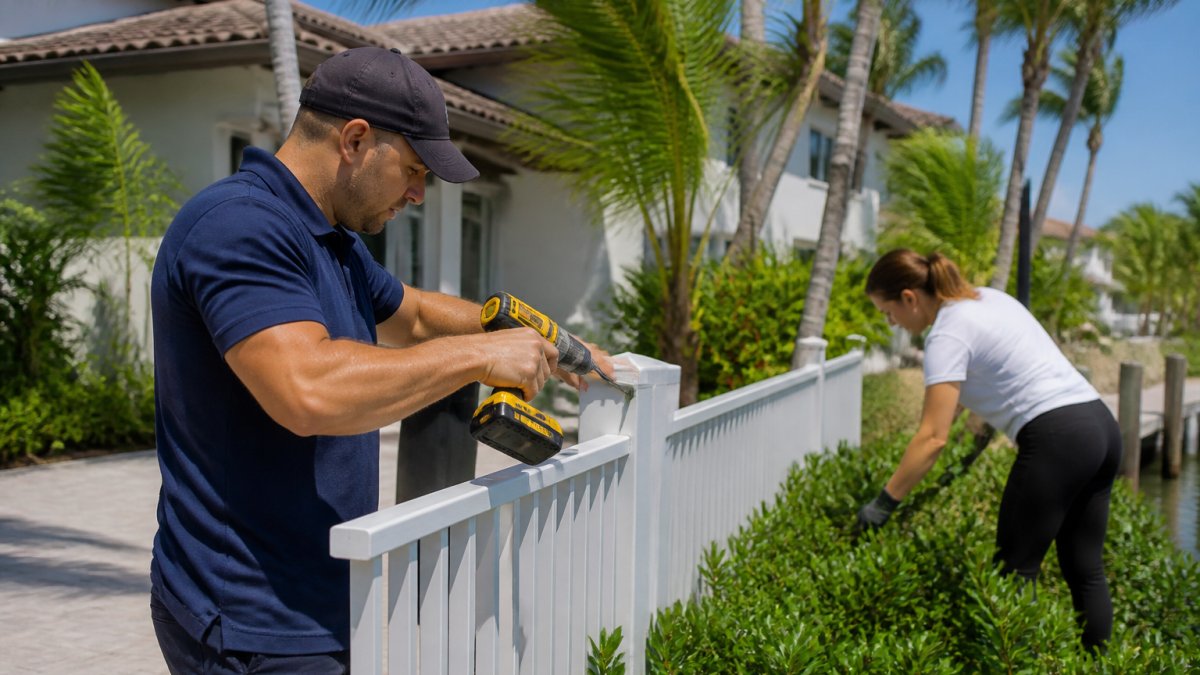
Best TaskRabbit Alternatives for Florida: 7 Top Apps
Table of Contents
- Why Florida Homeowners and Gig Workers Need TaskRabbit Alternatives
- The 7 Best TaskRabbit Alternatives for Florida, Ranked
- Apps Like TaskRabbit to Make Money: Which Pay Best for Gig Work?
- TaskRabbit Fees vs. Alternative Platform Costs, Compared
- How to Earn Money Doing Local Tasks in Florida
- Florida Licensing, Insurance, and Safety Checks That Matter
- Which TaskRabbit Alternative Fits Your Situation?
- Frequently Asked Questions
Last Updated: October 21, 2026
Why Florida Homeowners and Gig Workers Need TaskRabbit Alternatives
Finding reliable help for everyday tasks shouldn’t require a background check on the app itself. Yet many Florida homeowners and gig workers are discovering that national task platforms don’t fit how neighborhoods actually operate.
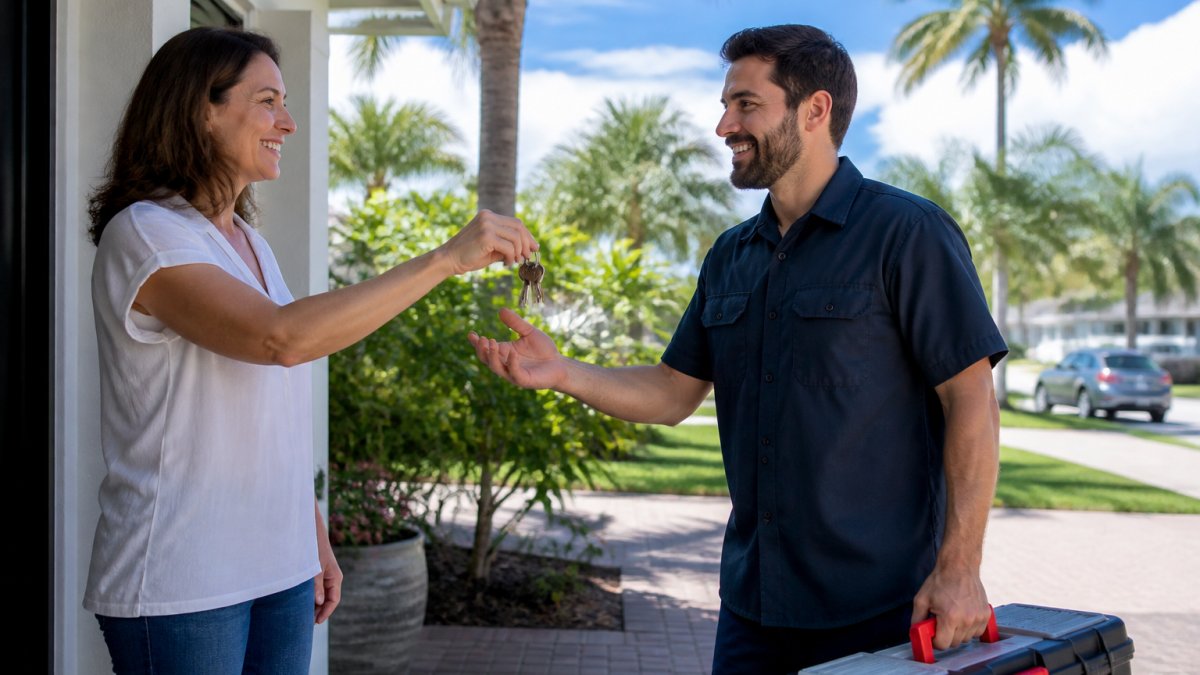
National marketplaces optimize for volume, not for the person posting a job in Broward or Palm Beach. Fees stack up, availability thins out in smaller neighborhoods, and workers juggle multiple apps to keep steady income.
The best taskrabbit alternatives for Florida are the ones that keep money local, verify who shows up at your door, and don’t bury fees in the fine print.
The 7 Best TaskRabbit Alternatives for Florida, Ranked
We ranked these by how well they serve both homeowners who need help and workers who need income.
| Platform | Best For | Fee Model | Local Focus |
|---|---|---|---|
| Biddy Jobs | Hyperlocal tasks in South Florida | No middleman, no hidden fees | Broward and Palm Beach counties |
| Handy | Home repairs and cleaning | Platform-set pricing | National |
| GreenPal | Lawn care | Marketplace quotes | National |
| LawnStarter | Recurring yard work | Subscription-style pricing | National |
| Nextdoor | Free neighbor recommendations | Free | Hyperlocal |
| OfferUp | Buying, selling, odd jobs | Free listings | Regional |
| Facebook Groups | Community referrals | Free | Hyperlocal |
1. Biddy Jobs: Hyperlocal Task Booking for South Florida
Biddy Jobs is a hyperlocal task marketplace connecting neighbors in South Florida.
What sets it apart is the verification layer. Every user is ID-verified, and community ratings keep accountability visible. Post a furniture assembly job and bids can arrive within minutes.
Pros: No hidden fees, ID-verified users, escrow protection, hyperlocal focus.
Cons: Coverage is concentrated in South Florida, so it’s not a fit for every state.
2. Handy: Home Repairs and Cleaning on Demand
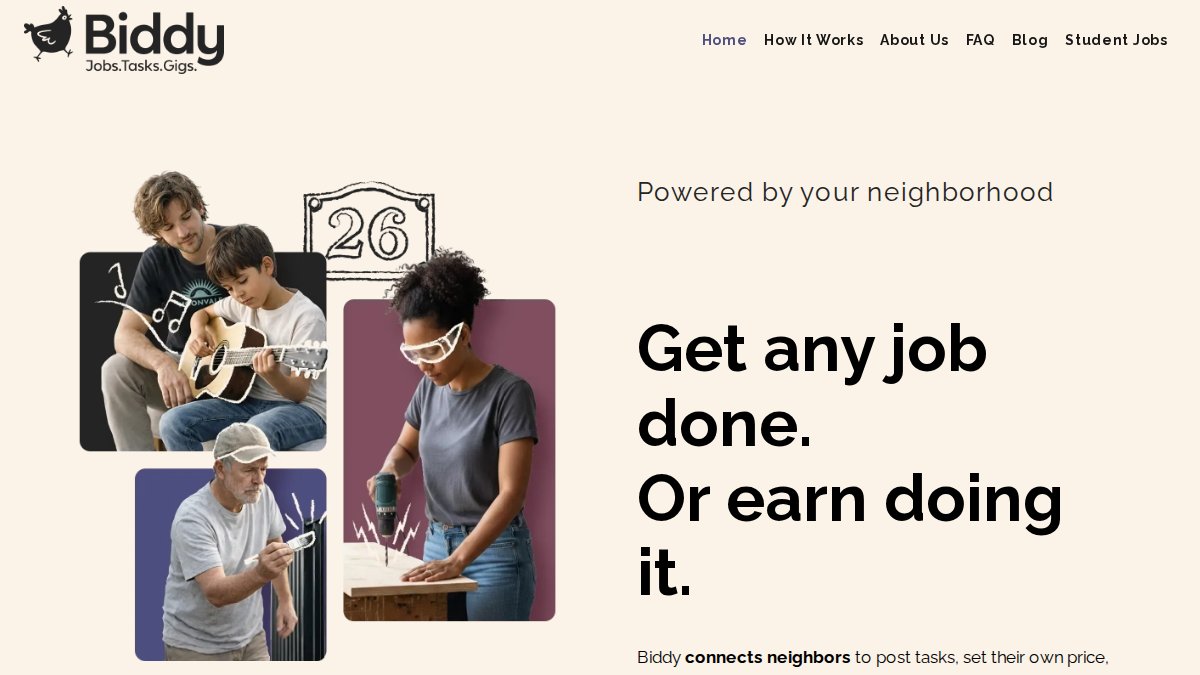
Handy focuses on home services: cleaning, plumbing, electrical, and furniture assembly. It’s solid for indoor repairs and recurring cleaning, but the platform sets rates, so there’s little room to negotiate.
Pros: Broad home-service categories, established national presence.
Cons: Pricing is platform-controlled; limited room for custom bids.
3. GreenPal and LawnStarter: Yard Work Specialists
If your task list starts and ends with the lawn, these two are worth a look. GreenPal connects homeowners with local lawn-care pros who bid on the work, while LawnStarter leans toward recurring, scheduled service. Both do yard work well but won’t help with moving or repairs.
Pros: Focused lawn expertise, easy recurring scheduling.
Cons: Single-category only; not a general task marketplace.

4. Nextdoor, OfferUp, and Facebook: Free Local Classifieds
These aren’t task platforms in the traditional sense, but a lot of local hiring happens here. Nextdoor and neighborhood Facebook groups surface trusted recommendations from people nearby, and OfferUp handles selling and odd-job listings. The catch: no escrow, no screening, and no dispute resolution.
Pros: Free, hyperlocal, built on real neighbor trust.
Cons: No payment protection or verification system.
Apps Like TaskRabbit to Make Money: Which Pay Best for Gig Work?
For workers, the question isn’t which app is biggest, it’s which one pays reliably and lets you keep more of what you earn. Apps like TaskRabbit to make money vary widely in fees and payouts.
Marketplaces that let workers set their own prices tend to produce better earnings per job, since you’re not competing purely on who bids lowest.
If you’re stacking apps, track your effective hourly rate per platform for a month. Most workers find one app quietly outperforms the rest once fees and travel time are counted.
TaskRabbit Fees vs. Alternative Platform Costs, Compared
Most comparison articles stop at “TaskRabbit charges a service fee.” That’s not useful when you’re deciding between a $45 furniture-assembly job and a $180 deep clean. What matters is the total cost to the customer and the net payout to the worker after every line item. Below is how fee mechanics differ across these platforms, plus a worked example.
The five cost components to compare
Every task platform prices using some combination of these, and the combination, not the headline rate, determines your bill:
- Hourly or flat rate, set by the platform (Handy, LawnStarter) or by the worker via bids (Biddy Jobs, GreenPal).
- Platform service fee, charged to the customer, the worker, or split. National marketplaces typically take a percentage; hyperlocal and bid-based marketplaces often take none or a flat listing fee.
- Minimum job charge, many platforms won’t dispatch a pro below a set minimum, which matters for 30-minute tasks like mounting a TV.
- Travel or trip charge, common for lawn and home-repair platforms outside a core service radius; in spread-out metros this can exceed labor cost on small jobs.
- Cancellation and reschedule terms, the window to cancel without a fee, and whether the worker is still paid if you cancel late.
How the models differ in practice
| Model | Who sets the price | Where the fee lands | Typical effect on the customer |
|---|---|---|---|
| Platform-set pricing (Handy, LawnStarter) | Platform | Built into the quoted price | Predictable quote, little room to negotiate |
| Bid-based marketplace (GreenPal, Biddy Jobs) | Worker | None or minimal; users set prices directly | Competitive quotes; you compare before booking |
| Free classifieds (Nextdoor, OfferUp, Facebook Groups) | Worker | None | Lowest sticker price, but no escrow or dispute protection |
The cheapest posted rate is rarely the cheapest completed job once travel, minimums, and reschedules are counted. Ask for an all-in quote before you confirm.
Worked example: a two-hour furniture assembly job
Assume a worker quotes $40/hour for a two-hour assembly job. Here’s how it can land differently:
- Bid-based marketplace with escrow: $80 labor + $0 platform markup = $80 total, paid through escrow so funds release only after completion.
- Platform-set pricing: the quoted rate already includes the service fee, so the customer sees one number, but the worker’s take-home is a percentage of it, which is why platform-set rates often run higher per hour than bid-based rates for the same task.
- Free classifieds: $80 agreed directly, but no escrow, no screening, and no dispute path if the work isn’t finished.
That’s the trade-off in one line: you’re either paying for protection, paying for convenience, or accepting risk to save on both.
Questions to ask before you book
- Is the quoted price all-in, or does it exclude a service fee, trip charge, or minimum?
- Who pays the platform fee, me or the worker?
- What’s the cancellation window, and am I charged if I reschedule?
Before confirming any booking, ask the provider for a written all-in quote that includes labor, any trip charge, and the platform fee. Comparing all-in quotes across two or three platforms takes about ten minutes and is the single biggest lever on your final bill.
Fee schedules change, so confirm current terms on each platform’s site before booking, but the five components above stay constant, and they’re what you should compare.
How to Earn Money Doing Local Tasks in Florida
Learning how to earn money doing local tasks comes down to three habits: pick two or three platforms rather than spreading thin across six, respond fast since early bids win more jobs, and build ratings early by taking smaller tasks that are easy to complete well.
- Choose two platforms that match your skills
- Complete your profile and ID verification
- Set a clear minimum rate that covers travel
Skipping ID verification on any platform limits your visibility and can lock you out of higher-paying jobs. Complete it before you start bidding.
Florida Licensing, Insurance, and Safety Checks That Matter
Most TaskRabbit-alternative roundups treat “background checked” as the end of the safety conversation. It isn’t. A background check tells you a worker has no disqualifying record; it says nothing about whether the work is legal for an unlicensed person, or who pays if a cabinet falls off the wall. Here are the three checks that matter, licensing, insurance, and platform screening.
When a task requires a licensed contractor
Florida regulates certain trades at the state level, and hiring an unlicensed worker for regulated work can leave you without recourse and, in some cases, expose you as the property owner. As a rule of thumb:
- Usually requires a state-licensed contractor: electrical work beyond swapping a bulb or plug-in lamp, plumbing beyond a simple fixture swap, structural repairs, roof work, HVAC service, and anything involving gas lines.
- Generally does not require a trade license: furniture assembly, picture hanging, general cleaning, lawn mowing and landscaping maintenance, junk removal, packing, and moving help.
- Grey area, verify before booking: minor drywall repair, painting, deck staining, gutter cleaning, and appliance installation involving water or gas connections. Some fall under local permitting rules depending on scope.
When in doubt, ask the provider for their license number and verify it directly. the Florida Department of Business and Professional Regulation maintains a public license lookup, and the Federal Trade Commission’s consumer guidance recommends confirming credentials before hiring for home services.
What insurance to verify, and why platform coverage isn’t the same thing
Two separate questions: does the worker carry insurance, and does the platform offer damage protection?
- General liability insurance covers third-party property damage or injury caused by the worker. Ask for a certificate of insurance (COI) for any job above a few hundred dollars, painting, large furniture assembly, anything mounted to a wall.
- Bonding protects against theft by a worker. It’s common for cleaning and in-home services; ask whether the provider or platform is bonded.
- Platform damage guarantees are not insurance. They’re typically limited, require reporting within a short window, and often exclude certain damage categories. Read the terms before you book, not after something breaks.
Customers often assume a platform’s “protection” covers full replacement value of damaged property. It usually doesn’t. For high-value items or large projects, confirm the worker’s own coverage.
How platform screening differs from licensed trade work
| Check | Typical marketplace screening | Licensed trade requirement |
|---|---|---|
| Identity verification | Common (ID check at signup) | Required for licensure |
| Criminal background check | Common, varies by platform | Required for licensure in regulated trades |
| Trade license | Rarely verified by the platform | Required and publicly verifiable |
| Liability insurance | Sometimes required, often not verified per job | Required for licensure |
| Dispute resolution | Platform-mediated, terms vary | State complaint process plus civil recourse |
That table is the buyer-side safety comparison most articles skip: a marketplace is optimized for matching and payment protection, while a licensed trade is optimized for regulated workmanship and accountability. The right choice depends on the task.
A pre-booking safety checklist
- Confirm whether the task falls under a regulated trade; if so, verify the license number through the state lookup.
- Ask for a certificate of insurance for any job involving wall-mounted items, painting, or work above a few hundred dollars.
- Confirm whether the platform holds payment in escrow until the job is complete.
Skipping the license check on regulated work is the costliest mistake in this guide. Unlicensed electrical, plumbing, or structural work can void homeowner insurance coverage and may require permits and re-inspection, costs that dwarf whatever you saved.
The short version: use a marketplace for unregulated tasks where speed and price matter, and use a licensed, insured local provider for anything that touches wiring, plumbing, structure, or gas. The platforms in this guide are built for the first category; don’t stretch them into the second.
Which TaskRabbit Alternative Fits Your Situation?
Match the platform to the job. For general tasks in South Florida with transparent pricing and escrow protection, Biddy Jobs is our recommendation. For lawn care, GreenPal or LawnStarter.
The best taskrabbit alternatives for florida are the ones that fit your neighborhood, your budget, and your need for safety. Compare a couple side by side before committing.
Frequently Asked Questions
What are other apps like TaskRabbit for finding local help?
Beyond TaskRabbit, Florida users can try Biddy Jobs for hyperlocal task booking in Broward and Palm Beach counties, Handy for home repairs and cleaning, GreenPal or LawnStarter for recurring yard work, and free classifieds like Nextdoor, OfferUp, and Facebook for neighborhood jobs. Each platform differs in fees, vetting, and service categories, so compare total cost per hour, cancellation policy, and whether providers are ID-verified or background-checked before you book.
How do TaskRabbit fees compare with alternatives?
TaskRabbit fees are typically built into the hourly rate you see, with the platform taking a service fee and adding a trust and support fee at checkout. Alternative marketplaces vary widely: some charge providers a percentage, some charge a flat booking fee, and free classifieds charge nothing but offer no escrow or dispute resolution. Always compare the final total, not just the advertised hourly rate, and check whether payment processing and damage protection are included.
Which apps like TaskRabbit to make money are best for gig workers in Florida?
For steady local income, Biddy Jobs lets you set your own prices and get paid through in-app escrow via Stripe, which suits handymen, cleaners, and students in South Florida. LawnStarter and GreenPal work well for recurring lawn care. Handy offers home-service jobs but sets rates. Free platforms like Nextdoor and Facebook cost nothing in fees but require you to handle payment and disputes yourself, which raises risk for both sides.
How can I earn money doing local tasks without a licensed trade?
You can earn money doing local tasks such as furniture assembly, moving help, yard work, cleaning, delivery runs, and event setup without a trade license in most cases. Focus on tasks that do not require permits or licensed trades like electrical or plumbing. Build ratings by starting with small jobs, set clear scope and pricing, use platforms with escrow so you get paid on time, and confirm whether the platform runs background checks or ID verification before you accept work.
What should I compare when choosing a task marketplace in Florida?
Compare service area coverage in your county, provider screening and background checks, total cost including service fees and minimum charges, cancellation and dispute resolution policies, payment processing speed, and customer support responsiveness. Also check whether the platform covers the service categories you need, like furniture assembly, home repairs, or cleaning, and whether same-day availability is realistic in your neighborhood rather than only in busier metro areas.
Finding reliable local help shouldn’t mean gambling on who shows up. Biddy Jobs connects South Florida neighbors through ID-verified users, secure in-app escrow powered by Stripe, and a bidding system where you set your own price. Download Biddy Jobs and get your next task booked with confidence.