7 Ways to Get Help With Grocery Runs Today
Last Updated: November 5, 2026
Quick Summary
The fastest way to get help with grocery runs is to write down what you need, when you need it, and your budget before contacting anyone. Help near you comes from a local food pantry, a community organization, a neighbor network, or a paid helper through a task app. Pick based on whether your barrier is money, transportation, mobility, or time.
- Call 211 first for same-day food referrals, then contact the nearest pantry that takes walk-ins.
- Volunteer driver networks usually require scheduling 3 to 7 days in advance.
- Food pantries often need a photo ID and proof of address, and some ask for a referral.
- With a paid helper, agree on the list and budget before the run happens.
- On Biddy, you post your run, review bids from ID-verified locals, and pay through escrow.
Table of Contents
- Start With a Clear Picture of What You Need
- How to Get Help With Grocery Runs Near Me
- How to Get Help With Grocery Runs Online
- Free Food Boxes Delivered to Your Home
- I Need Help With Food Today: Short-Term Emergency Steps
- Government Benefits and Eligibility: SNAP and Nutrition Assistance
- What to Expect When You Request Help
- Post Your Grocery Run on Biddy and Choose Your Helper
- Frequently Asked Questions
Start With a Clear Picture of What You Need
The fastest way to get help with grocery runs is to write down three things before you contact anyone: what you need, when you need it, and how much you can spend. That sounds obvious. Most people skip it and end up frustrated.
A vague request tends to get vague responses. A clear one tends to get more useful responses.
So start here:
- The list. Roughly how many bags or items? A week of basics, or a full stock-up?
- The timing. Today, tomorrow, or a set weekly slot?
- The budget. A dollar range you’re comfortable with.
If you can’t lift heavy bags or don’t drive, say so up front. Helpers plan around it. Hiding it wastes everyone’s time.
For a fuller walkthrough of turning that list into a post, see how to post a job for local help.
How to Get Help With Grocery Runs Near Me
Help with grocery runs near you usually comes from one of four places: a local food pantry, a community organization, a neighbor network, or a paid helper you find through a task app. Each one solves a different problem, and the one you pick should depend on whether your barrier is money, transportation, mobility, or time.
Local Food Banks and Pantries
A food pantry is a local site that gives out free groceries to people who need them. Most run on donations and volunteers, and many operate on weekday hours only.
What to expect:
- Bring a photo ID and proof of address if you can.
- Some sites ask for a referral; many don’t.
- Availability changes week to week.
Call ahead before you go. Hours and rules shift often.
A pantry solves the cost problem, not the transportation problem. If you can’t get to the site, ask two questions when you call: does the pantry offer home delivery for homebound households, and does it partner with a volunteer driver program?
Community Organizations and Neighbor Networks
Churches, senior centers, and neighborhood groups often run informal grocery help. A neighbor might pick up your list while doing their own run. A church volunteer might drop off a food box.
These networks are small but fast. Ask a social worker, clergy member, or human services agency whether they can make an introduction.
Volunteer Shopper and Driver Programs
Several national and local programs pair volunteers with people who can’t leave home or can’t drive:
- Senior nutrition and homebound programs. Area Agencies on Aging often fund grocery delivery and friendly-visitor programs for older adults. Call the Eldercare Locator line to find the agency covering your ZIP code.
- Faith-based delivery ministries. Many congregations run weekly grocery runs for shut-ins; ask the parish office rather than a general hotline.
- Volunteer driver networks. Some nonprofits recruit drivers for medical and grocery trips. They usually require advance scheduling, often 3 to 7 days out.
A common pattern is that these programs have income or age eligibility, a waiting list, and a set delivery day. Ask about all three before you count on one.
Paid Helpers Through a Task App
If you don’t qualify for a free program or can’t wait for a slot, a paid helper is the reliable fallback. You post the run, set a budget, and choose from local bids.
Watch out: free programs often require proof of income or age at intake, so have documents ready before the first call, a missing document can push you to the back of a waiting list.
Here are the main places to find help with grocery runs near you, and what each one is best for.
| Option | Best for | Key difference |
|---|---|---|
| Local food banks and pantries | Cost problem | Free groceries; often weekday hours only |
| Community organizations and neighbor networks | Fast, informal help | Small but fast; ask for an introduction |
| Volunteer shopper and driver programs | People who can’t leave home or drive | Eligibility, waiting list, set delivery day |
| Paid helpers through a task app | Working on your schedule | Post the run, set a budget, choose from bids |
How to Get Help With Grocery Runs Online
Online tools split into two groups: free locators that point you to food programs, and paid marketplaces where you hire a real person to do the run. Knowing which you need saves time, and knowing what each one can and can’t do for the run itself saves a wasted trip.
Food Assistance Locators and 211
A food assistance locator is a search tool that maps nearby pantries, meal programs, and food boxes by ZIP code.
The USDA National Hunger Hotline and food assistance tools connects callers with emergency food referrals.
Two practical notes:
- Ask whether the program offers delivery or pickup.
- Confirm eligibility rules before you make the trip.
When you use a locator, filter for the thing that actually blocks you. If transportation is the barrier, look for the delivery or homebound flag, not just the closest pin.
Grocery Delivery and Pickup Options
Delivery and pickup are a direct answer to “help with a grocery run,” and the options differ in cost and eligibility:
-
Store curbside pickup. You order online and an employee loads your car. Usually free or a few dollars; you still need a vehicle and the ability to drive to the store.
-
SNAP online purchasing. Confirm with your state agency whether participating online retailers are available to you and whether delivery fees can be paid with benefits.
-
Senior and homebound delivery programs. Often free, but registration and eligibility apply (see the delivery section below).
-
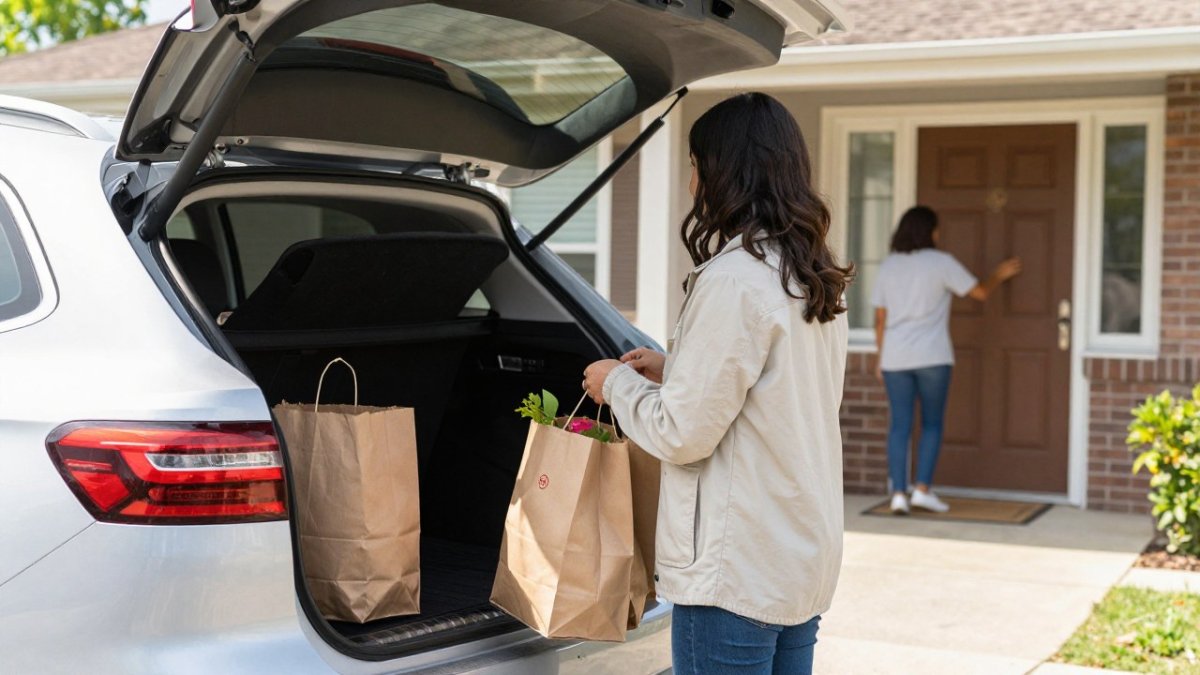
Volunteer or paid shopper. A person shops from your list and delivers. The most flexible option and the only one that handles stairs, gate codes, and special requests.
A simple way to choose: if cost is the barrier, start with a pantry or SNAP online purchasing. If mobility or transportation is the barrier, start with a homebound delivery program, then fall back to a paid shopper.
Hyperlocal Task Apps and Neighbor Helpers
A task app connects you with a neighbor who will do the run for you. You post the job, set your budget, and pick from the bids that come in.
That’s the model we built Biddy Jobs around. You post an errand, get bids from ID-verified locals, and pay through in-app escrow powered by Stripe.
You can post odd jobs and small gigs like a grocery run in minutes.
Free Food Boxes Delivered to Your Home
Free food boxes delivered to your home typically come from meal programs, senior services, and community groups.
Common sources:
- Senior nutrition programs, often for homebound adults
- School and family food box programs
- Faith-based delivery ministries
Ask about three things: the registration form, delivery frequency, and whether a waiting list applies. Funding availability drives most of these programs, so slots open and close.
If you need delivery and don’t qualify for a program, a paid helper is the reliable fallback.
I Need Help With Food Today: Short-Term Emergency Steps
If you need help with food today, call 211 first, then contact the nearest pantry that takes walk-ins. Do both in the same hour.
A simple emergency sequence:
- Call 211 for same-day referrals.
- Check a food assistance locator for open pantries nearby.
- Call two pantries and confirm they’re open now.
- Ask a neighbor or post a task if you can’t get there.
- Use a meal program for a hot meal while groceries wait.
Don’t wait for a perfect option. A pantry that’s open beats a better one that isn’t.
Government Benefits and Eligibility: SNAP and Nutrition Assistance
SNAP is the largest federal nutrition assistance program in the United States, and eligibility depends on income, household size, and other rules set by your state.
Before you apply, gather:
- Photo ID
- Proof of income
- Proof of residence
The USDA SNAP eligibility and application guidance explains the rules and links to state applications. Approval takes time, so pair an application with a pantry visit rather than waiting on it.
Watch out: rules and paperwork vary by state, so confirm requirements with your local agency before you submit.
What to Expect When You Request Help
Expect a short intake process, a few questions about your household, and a clear answer about timing. Most programs and helpers want the same information: what you need, where you are, and when.
What to have ready:
- Your grocery list
- Your address and any access details
- A phone number for confirmation
With a paid helper, expect to agree on the list and budget before the run. With a pantry, expect to show ID and possibly wait.
Before you invite a stranger to help, read up on the safest ways to hire local help.
Post Your Grocery Run on Biddy and Choose Your Helper
Here’s the part that changes your week. Instead of calling around, you post once and let local helpers come to you.
The steps are simple:
- Download Biddy and create your account.
- Post your grocery run with your list and budget.
- Review bids from ID-verified neighbors.
- Pick your helper and confirm the details.
- Pay through escrow when the job is done.
You set the price. You choose the person.
If you’re in a nearby city, you can see how it works and hire local help in Coconut Creek, FL for errands, moving help, and small fixes.
Ready to stop juggling phone calls? See exactly how Biddy Jobs works and post your first task today.
Frequently Asked Questions
What do I do if I can’t afford groceries right now?
Start by calling 211 to reach a local referral specialist who can point you to food pantries, meal programs, and emergency food boxes open near you. Many pantries offer same-day pickup with no proof of income required, and some deliver free food boxes to your home. You can also apply for SNAP benefits through your state’s benefits portal. If you need help with grocery runs because of transportation or mobility limits, ask a local task app or community volunteer to shop and deliver for you.
Can someone pick up and deliver groceries for me?
Yes. You have three main paths: grocery store delivery services, volunteer shopper programs through local nonprofits and faith groups, and hyperlocal task apps where you post a grocery run and neighbors bid on it. For the task app route, list your store, budget, and item list, then choose a helper whose ratings and ID verification look solid.
How can I arrange help with a grocery run online?
Use an online food assistance locator or call 211 to find pantries and delivery programs in your area, then check whether they offer pickup or home delivery. For a one-off grocery run, post the job on a hyperlocal marketplace with your list, store preference, and delivery window. Include details like gate codes, parking notes, and whether you need the receipt. Clear instructions get faster bids and fewer back-and-forth messages.
Where can I find food assistance if I need groceries today?
Call 211 or search an online food assistance locator for pantries with weekday hours open now. Many emergency food programs keep same-day slots and can issue a food box within hours. Churches, community centers, and human services agencies often have emergency food on hand. If you cannot get out, ask a neighbor, social worker, or local task app helper to pick up and deliver the food box. Bring a photo ID if you have one, though many free services do not require it.
Getting groceries shouldn’t take a full day of phone calls. Biddy Jobs connects you with ID-verified neighbors who can handle the run for you, with escrow payments through Stripe and no hidden fees. Post your list, set your budget, and pick your helper. Get started with Biddy Jobs and get your groceries handled this week.