
What Are the Simplest Ways to Earn Extra Cash Locally?
Last Updated: October 30, 2026
Quick Summary
The simplest ways to earn extra cash locally are yard work, house cleaning, pet sitting, dog walking, errand running, delivery, rideshare, and reselling. These jobs need little training, use tools you mostly own, and often pay within days. Quote a flat rate with a clear scope so the work does not grow.
- Yard work and house cleaning are the fastest local jobs to land, with startup costs from $0 to $150.
- Pet sitting demand spikes on weekends and vacations, and dog walking fits around a day job.
- Delivery and rideshare pay steadily, but fuel, maintenance, and insurance cut into net earnings.
- Set your gross rate by adding direct costs, a 10-15% buffer, and a self-employment tax set-aside.
- Ask for photos or a short video walkthrough before quoting any job you have not seen.
Table of Contents
- Why Local Work Beats Most Online Side Hustles
- The Simplest Ways to Earn Extra Cash Locally
- Finding Part Time Gig Work in Florida Without the Guesswork
- How to Price Local Services So You Actually Profit
- Safe Ways to Find Neighborhood Jobs
- Startup Costs, Net Earnings, and Matching Gigs to Your Schedule
- Download Biddy and Pick Up Your First Local Job
- Frequently Asked Questions
Why Local Work Beats Most Online Side Hustles
Local work pays faster and costs less to start than most online side gigs.
Most guides push survey sites and print-on-demand stores, but those take months to pay off.
The trade-off: local work means showing up in person. You trade convenience for cash flow.
- Faster payment: cash or app payout within days
- Low startup costs: most jobs need tools you already own
- Ratings: a well-done Task makes your next Bid easier to win
Below, we show you the simplest options and how to price them so you actually profit.
The Simplest Ways to Earn Extra Cash Locally
The easiest local jobs fall into three groups: home tasks, pet and errand care, and delivery or reselling. Each needs little training and has steady demand.
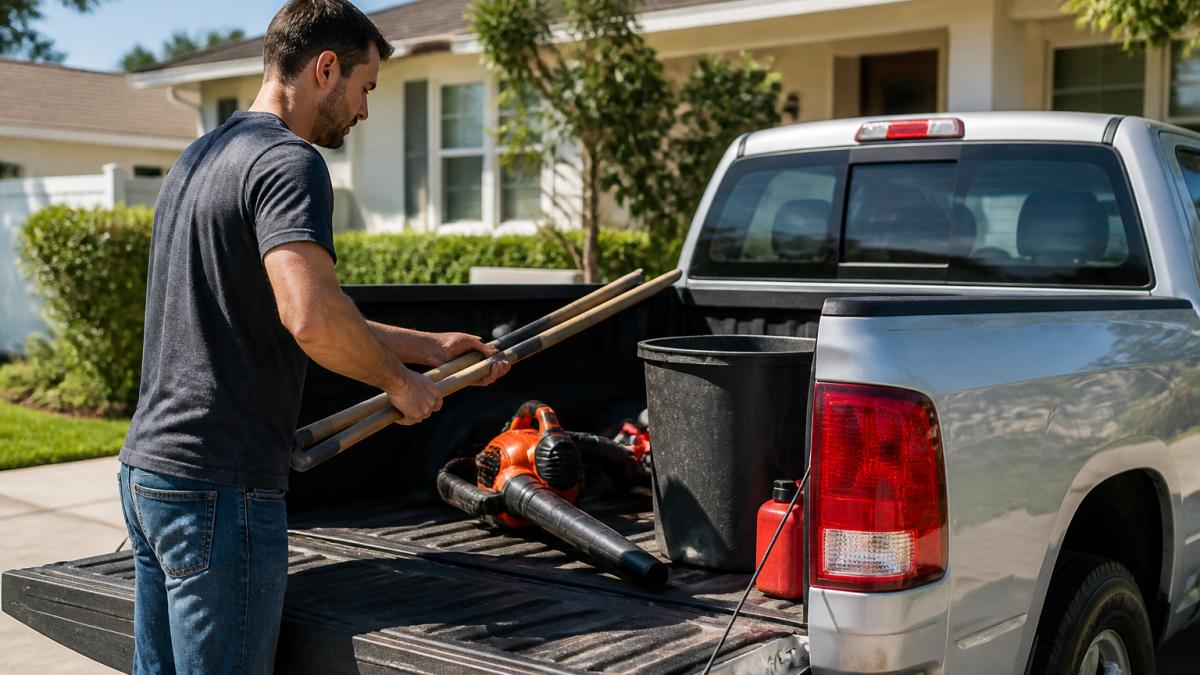
Yard Work, Cleaning, and Household Tasks
Yard work and house cleaning are the fastest local jobs to land. Homeowners need them regularly, and the tools are basic.
- Mowing, edging, and leaf blowing
- Weeding, mulching, and hedge trimming
- Deep cleaning kitchens and bathrooms
Don’t underprice the first job to win it. Quote a flat rate for the whole task and set a clear scope so the work doesn’t grow.
Pet Sitting, Dog Walking, and Errand Running
Pet care and errands suit anyone with a flexible schedule. Dog walking fits around school runs or a day job. Pet sitting covers weekends and vacations, when demand spikes.
Errand running is just as simple: grocery pickup, pharmacy trips, or waiting for a delivery. For local pet sitting pay, see our guide to pet sitter rates in South Florida before you set your price.
Delivery, Rideshare, and Reselling
Delivery and rideshare driving bring steady hourly pay, but gas, car wear, and insurance eat into earnings.
Reselling works differently: buy low at yard sales or clearance racks and sell used items on an online marketplace. No car or schedule needed.
- Delivery driving: flexible hours, but track your fuel costs
- Rideshare driving: best for busy areas with high demand
- Reselling: low startup cost, but slower to sell
Finding Part Time Gig Work in Florida Without the Guesswork
Finding part time gig work in Florida comes down to three channels: personal referrals, community groups, and local advertising. Word of mouth fills your calendar fastest; groups and flyers fill the gaps.
Start with the people you know. Tell neighbors, family, and friends what you offer. A single referral often turns into repeat work.
Next, post in community groups and on local boards. Keep it short and specific: what you do, your area, and how to reach you.
For a deeper walkthrough, read our guide on finding part-time gig work in Florida.
How to Price Local Services So You Actually Profit
Here’s a pricing method you can run in your head, plus the cost lines beginners forget.
Start from a target net, not a target rate
Decide what you want to keep per hour after costs, then work backward. Want $25 an hour net and the job costs $5 an hour in fuel, supplies, and travel? Your gross rate needs to be about $30 an hour before taxes. Round up, not down.
A simple working formula:
- Target net hourly: what you want to keep
- Add direct costs: fuel, supplies, travel time, platform fees
- Add a buffer: 10-15% for scope creep and rework
The cost lines beginners forget
- Platform fees. Many gig and marketplace apps take a percentage of each job. Read the fee schedule before you set your rate; a rate that nets $30 on one platform may net $24 on another.
- Self-employment tax. Local work is usually self-employment income. In the U.S., self-employment tax covers Social Security and Medicare; the IRS publishes the current rate and the income threshold for filing (Self-employment tax (Social Security and Medicare taxes)). Set aside a percentage of each payment rather than scrambling in April.
- Mileage. The IRS publishes a standard mileage rate each year that you can use to deduct business driving (Standard mileage rates). Track trips from the moment you leave for a job.
Flat rate vs. hourly: when each one protects you
- Flat rate works when the scope is clear and repeatable: a standard lawn, a two-bedroom clean, a 30-minute dog walk. Clients prefer it because the price is predictable.
- Hourly works when the job is open-ended: furniture assembly, deep cleaning, errand running. It protects you when the task runs long.
- Hybrid works for reselling and delivery: quote a per-item or per-trip rate, then add a minimum.
Quote scripts you can copy
- Opening: “Thanks for reaching out. Can you send a photo of the area and tell me roughly how big it is? That way I can give you a firm price instead of a guess.”
- Setting the rate: “For a job that size, my rate is $X flat, which includes supplies and cleanup. If it turns out to be larger than the photos show, I’ll check with you before doing extra work.”
- Handling pushback: “I understand. My price covers supplies, travel, and insurance, so I can’t go lower without cutting something. I can adjust the scope if that helps.”
A worked example
Say you want to net $25 an hour walking dogs. You plan four 30-minute walks a day plus 30 minutes of travel, about 4 hours of work for 2 hours of paid walking. To net $25 an hour across the block, you need roughly $100 per day before costs. Four walks at $25 each gets you there, but only if you cluster them in one neighborhood so travel stays short.
Red flags in your own pricing
- You’re quoting before you’ve seen the job.
- You’re the cheapest quote in the neighborhood and still busy, that usually means you’re losing money.
- You haven’t counted platform fees or taxes.
Price the job so it’s worth doing. A fair rate and a good rating beat a bargain rate every time.
Safe Ways to Find Neighborhood Jobs
Safe ways to find neighborhood jobs start with verification and clear payment terms. Meet new clients in daylight.
Cash works for small tasks, but app-based escrow holds payment until the work is done, which can protect both sides.
- Check the client’s profile and reviews before you commit
- Confirm the scope in writing before you start
- Use a payment method with a record
The Federal Trade Commission’s consumer advice on job scams explains the red flags to watch for, like upfront fees or pressure to pay fast.
Startup Costs, Net Earnings, and Matching Gigs to Your Schedule
This section fills that gap: what each option costs to start, what you keep after expenses, and how to match work to the hours you really have.
Startup costs by job type
These are typical ranges for a beginner using equipment they mostly already own. Treat them as planning numbers, not quotes, prices vary by market and season.
| Job Type | Typical Startup Cost | Main Ongoing Costs | Time to First Payment |
|---|---|---|---|
| Yard work | $0-$150 (hand tools) to $300+ (if you need a mower or trimmer) | Fuel, blade sharpening, bags | Days |
| House cleaning | $50-$150 (supplies) | Chemicals, rags, travel | Days |
| Pet sitting / dog walking | $0-$50 (leash, waste bags, app fees) | Platform fees, travel | Days |
| Errand running | $0-$30 | Fuel, parking, platform fees | Days |
| Delivery driving | $0 if you already have a car; otherwise vehicle costs dominate | Fuel, maintenance, insurance, platform fees | Same day to a week |
| Rideshare driving | Vehicle, insurance rider, phone mount | Fuel, maintenance, commercial insurance | Days |
| Reselling | $20-$100 in inventory | Storage, shipping, platform fees | Weeks to months |
Net earnings: the number that matters
Gross pay is what the app shows you. Net is what lands in your account after costs and taxes. A simple way to estimate net:
Net = Gross − direct costs − platform fees − self-employment tax set-aside
- Direct costs: fuel, supplies, parking, tool wear.
- Platform fees: check the current fee schedule for each app; percentages vary widely.
- Self-employment tax: the IRS publishes the current rate and filing threshold. Set aside a percentage of each payment.
Delivery and rideshare look like the highest hourly pay on paper, but after fuel, maintenance, and insurance, net pay can drop well below gross. Yard work and cleaning have lower gross rates but very low ongoing costs, so net can be higher per hour. Reselling has the lowest ongoing cost but the slowest cash conversion.
Matching gigs to your real schedule
Don’t ask “how much time do I have?” Ask “what blocks of time do I reliably control?”
- 30-60 minute blocks, unpredictable: errand running, short dog walks, reselling listings.
- 2-4 hour blocks, predictable: house cleaning, yard work, pet sitting visits.
- Full days, flexible: delivery driving, rideshare, larger yard projects.
A quick decision framework
- How soon do you need cash? Days → local services. Weeks → reselling.
- How much can you invest upfront? Under $50 → pet care, errands, cleaning. Over $300 → yard work with equipment, delivery if you already have a car.
- How physical do you want the work? High → yard work, cleaning. Low → reselling, errand running.
- How predictable is your schedule? Predictable → longer one-time Tasks like yard cleanups or moving help. Unpredictable → errands and short walks.
- Do you have a vehicle? No → pet care, cleaning, reselling. Yes → delivery, errands, yard work.
Track it or guess it
Keep a simple log: date, job, gross pay, direct costs, platform fee, miles. After two weeks you’ll know your real hourly net for each type of work, and can drop the ones that don’t pay. Our guide to small gigs near you shows how to fit short tasks around a full calendar.
Download Biddy and Pick Up Your First Local Job
Turning local work into steady supplemental income takes one more step: a safe place to find jobs. That’s where Biddy Jobs fits.
Biddy Jobs is a hyperlocal task marketplace connecting neighbors across South Florida. You bid your own price on short, one-time Tasks. Posting and bidding are free, and Biddy charges a small service fee on completed Tasks. Every user is ID-verified, and payments run through secure in-app escrow powered by Stripe.
Here is how to start:
- Download the app and create your profile
- List the services you offer and your rates
- Browse local jobs and send your bid
- Complete the task and get paid through escrow
If you want to earn extra cash locally without the guesswork, our guide on how to start earning extra income locally walks you through the first week. You can also browse realistic ways neighbors make money close to home for more ideas.
Frequently Asked Questions
What are the easiest ways to make extra money in my neighborhood?
The lowest-barrier options are yard work, house cleaning, pet sitting, dog walking, and errand running. These need little more than basic supplies and a free weekend, and neighbors pay for them because they save time. Reselling used items and delivery driving are also simple to start. Pick one that matches what you already own and the hours you actually have free, then list it on a local marketplace where neighbors can see your ratings before they hire you.
How can I find local gig work without paying fees?
Start with free channels: community groups, personal referrals, and flyers in your building or neighborhood. When you use an app, check what it charges before you sign up, since some platforms take a cut of every job. Look for platforms that let you set your own prices and show fees upfront, so the amount you quote is close to what you keep. Personal referrals cost nothing and often bring repeat work.
How do I set my own prices for local tasks?
Work out your costs first: supplies, gas, and the time the job takes door to door. Then check what neighbors are already paying for similar work and position yourself near that range. Price by the job rather than the hour for small tasks, because it rewards you for getting faster. Raise your rate once you have several positive reviews, and quote a clear scope so add-ons do not eat your margin.
How can I ensure payment security when working locally?
Use platforms with in-app escrow, where the customer’s payment is held until the job is marked complete, rather than accepting cash or personal transfers from strangers. Confirm the terms in writing before you start, including the scope and the price. For repeat clients, keep a simple record of each job. Escrow protects both sides: you know the money exists, and the customer knows it only releases when the work is done.
The hardest part of local work is not the job. It is finding trustworthy clients and getting paid on time. Biddy Jobs solves both with ID-verified users, in-app escrow payments through Stripe, and a bidding system where you bid your own price on the Tasks you choose. Get started with Biddy Jobs and turn your free hours into reliable local income.